Pool systems can seem confusing, with all the pipes, valves, and equipment involved. This guide will make things easier to understand by first showing you a simple setup with just the essential equipment, then going over optional features and extra parts you might find in some systems.
Basic Pool-Only System
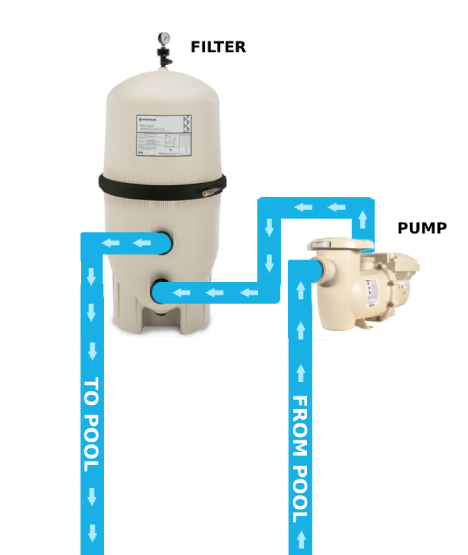
How a Basic System Works
The pool pump runs every day to move water through the system. This keeps the water clean by filtering out debris and helps prevent it from becoming stagnant. Here’s a simple look at how the water flows step by step:
1. Skimmer Intake: Water is pulled from the top edge of the pool through the skimmer. Inside the skimmer is a basket that catches large debris like leaves and twigs floating on the surface. Some systems also pull water from a main drain at the bottom of the pool or from a suction-side vacuum. These may work together with the skimmer or on their own, depending on the setup.
2. Pump Basket: The water then goes through the pump, where there is another leaf basket, providing a second chance to catch debris before it reaches the pump impeller.
3. Filtration: After the pump, water flows into the main filter, which removes fine particles and debris such as dirt and dead algae to help keep the water clean and clear.
4. Return to Pool: Once filtered, the clean water is returned to the pool and to the spa if there is one through the return jets.
Automated Timing: Most pool systems include an automatic timer that runs the system each day, typically for 6 to 12 hours, and in some cases, it runs continuously for 24 hours.
Pool System with Spa
When your pool is paired with a connected spa (hot tub), your system includes additional valves to control whether water is drawn from or returned to the pool or the spa.
Daily Filtration Mode
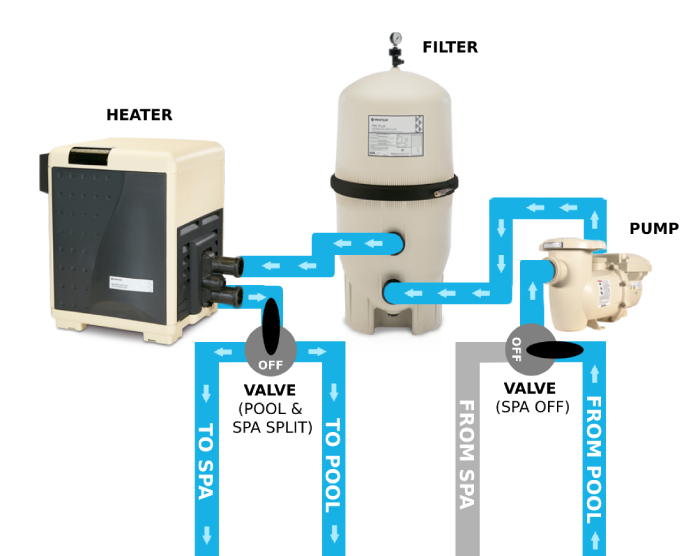
For regular daily operation, the system should be set to filter and circulate both the pool and the spa.
Valve settings for daily filtration:
Suction valve: Set to pull 100% of the water from the pool
Return valve: Set to return water to both the pool and the spa
This setup keeps both the pool and spa water clean and moving.
Remember: You should never pull water from the spa for daily filtration, as this can lead to the spa draining. This can happen if the spa is elevated above the pool because when the pump shuts off, water can flow backward through the spa suction line into the pool. A check valve can prevent this on the return line but cannot be used on the suction side. Even if the spa is not elevated, pulling from it is still risky. If the pool suction becomes blocked, the system may begin pulling more from the spa, which can also cause it to drain.
How To Heat the Spa
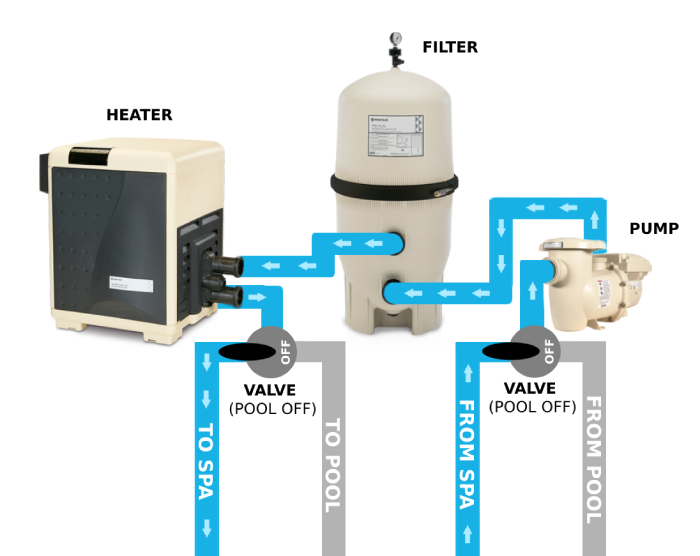
To heat the spa, you’ll need to change the valve positions to isolate the spa from the pool.
Valve settings for spa heating:
Suction valve: Set to draw water only from the spa
Return valve: Set to send water only back to the spa
This creates a closed loop for the spa, allowing it to heat quickly without affecting the pool.
Additional Common Equipment and Features
Automation Systems
Automation systems allow you to control your pool’s equipment, including pumps, lights, valves, and water features, through a digital controller or mobile app. These systems replace a basic pump timer and offer much greater control. They can manage multiple valve actuators, so you don’t have to remember how to manually set the valves to heat the spa or switch them back afterward. Instead, you can use a simple interface on your phone or tablet to activate spa mode, set schedules, adjust temperatures, and more
Chlorine Tablet Feeder
Chlorine tablet feeders help maintain a consistent chlorine level by slowly dissolving tablets into the water. There are several types, including floating feeders that drift on the pool surface, in-line feeders plumbed into the return line after the pump and filter, and in-deck feeders installed next to the pool and connected to the plumbing below ground.
Suction-Side Automatic Vacuum
This type of pool cleaner connects to the skimmer or a dedicated suction port. When the pump runs, the vacuum moves along the pool floor, collecting debris using the pump’s suction power. It’s a popular hands-free cleaning option for many pool owners.
In-Floor Pop-Up Cleaning System
An in-floor pop-up cleaning system uses a series of jets installed in the pool floor that rise in sequence to push debris toward the main drain. These systems assist with floor cleaning and circulation but are generally less effective than suction-side vacuums.
Salt Chlorine Generator (Salt System)
Saltwater systems produce chlorine from salt through a process called electrolysis. They consist of a power center and a salt cell. The cell is plumbed into the pool’s return line, after the filter and heater if present, so that water flows through it. As saltwater passes through the cell, chlorine is generated automatically, reducing the need for manual chlorination.
Water Features (e.g., waterfalls)
Water features such as waterfalls may be operated by dedicated pumps or connected to the main system through valves. They enhance the atmosphere of the pool area by adding visual appeal and the sound of flowing water. Most systems allow these features to be turned off when a quieter or simpler setting is preferred.
Extra Pumps
Some systems use multiple pumps to operate water features, spa jets, or in-floor cleaning systems independently from the main filtration cycle. These pumps are often controlled manually or by an automation system.
Air Blower (for Spa Jets)
A blower injects air into spa jets, enhancing the bubbling, massaging effect. This is typically used during active spa use and controlled by a dedicated switch or button.
Solar Heating System
Water is pumped through solar panels, usually installed on a roof, where it’s heated by the sun and returned to the pool. Solar heating is an energy-efficient, eco-friendly option and is commonly used in areas like Tucson, AZ.
Final Thoughts
Understanding the basics of your pool and spa system can make routine maintenance easier, help you spot problems early, and ensure your system is operating efficiently. Whether you’re a new pool owner or just looking to learn more, having a working knowledge of your system gives you confidence—and makes troubleshooting much less intimidating.
Need Professional Help?
Call Splash Pool Service at 📞 520-623-2213 or visit splashpoolservice.com for a free evaluation.